Planning Resilient Urban Forests
A simple stroll through a city allows us to appreciate the presence of trees. They provide us with shade, shelter and feed a variety of insects and animals and, overall, beautify our cities. Yet these precious urban forests should not be taken for granted. Climate change, pest insects, severe weather, air pollution and urbanization are all factors that threaten them.
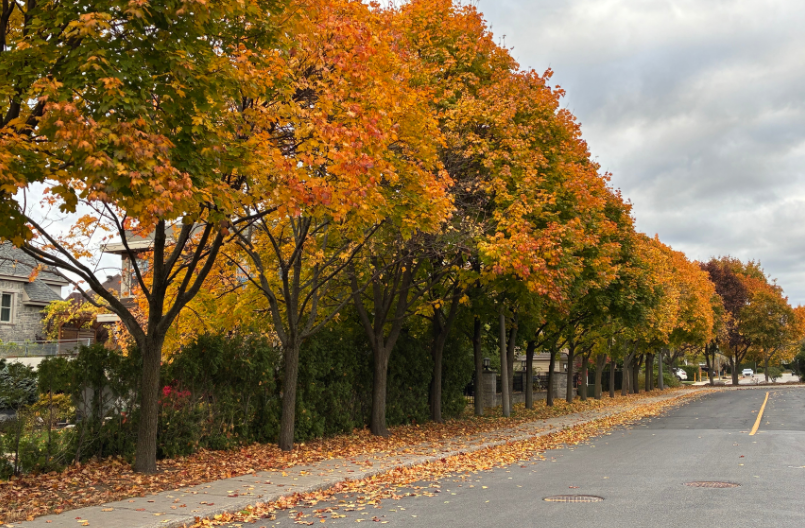
For a long time, urban tree plantations were guided by criteria of aesthetics, accessibility and financial value, creating homogeneous and vulnerable forests.
With the SylvCiT project, Marie-Jean Meurs’ research team proposes a tool that allows municipal officials to analyze their forest with an innovative approach centered on functional biodiversity. This enables evidence-based decisions that enhance forest resilience and their capacity to withstand environmental changes.
While this method is promising, it remains complex because it requires many resources and inventory data. A user-friendly platform is therefore crucial to enable municipal officials to analyze the current state of their urban forests. SylvCiT is a tool that allows for the simulation of different planting scenarios by evaluating several indicators.

Marie-Jean Meurs is a professor in the Department of Computer Science at the Faculty of Science of the Université du Québec à Montréal (UQAM). She is co-holder of the Quebec Research Chair – Discoverability of Scientific Content in French. Photo credit: UQAM
“Creating urban forests capable of withstanding severe weather and pests while maximizing their ecological benefits represents a complex challenge for Quebec municipalities. SylvCiT enables a unified analysis of the forest across an entire municipality or a specific area, evaluating the current state of several data points such as its functional diversity, species richness or carbon storage value,” explains Marie-Jean Meurs, program lead.
At the heart of the platform is an artificial intelligence system that suggests the best species to plant according to established priorities. These recommendations are based on machine learning algorithms trained on Calcul Québec’s Béluga and Narval clusters. The platform also allows for simulating the benefits that each proposed planting scenario would bring.
“Thanks to Calcul Québec’s and the Digital Research Alliance of Canada’s infrastructure, the training time for our models is considerably reduced. This allows us to test numerous sets of hyperparameters, process large datasets and improve both the software’s performance and experimental rigor,” emphasizes Marie-Jean Meurs.
The federated resources and support from Calcul Québec analysts also enable the maintenance of the SylvCiT platform, offering an accessible and scalable tool for planning Quebec’s urban forests.
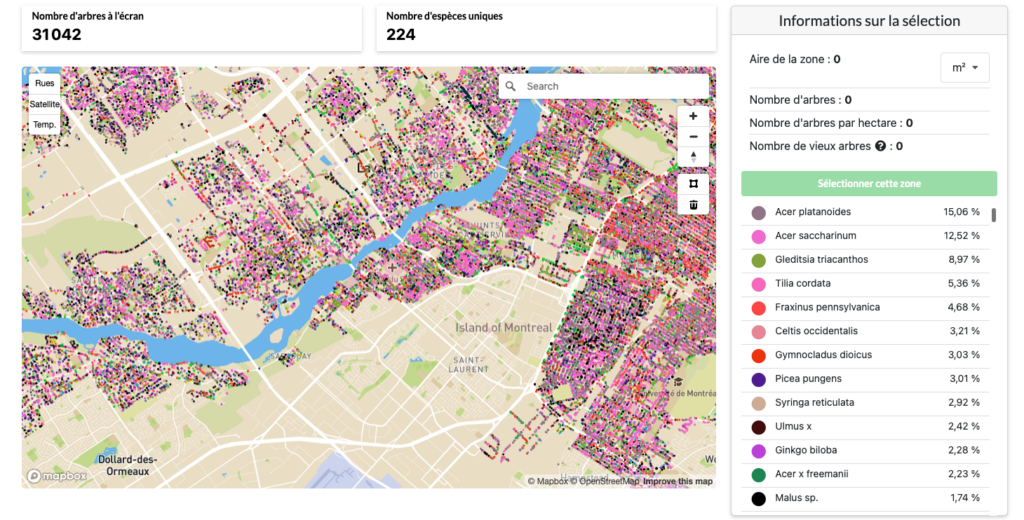
SylvCiT (http://sylvcit.ca) is open source, free to use, and accessible on the web. It was developed with the support of Hydro-Québec, Fonds de recherche du Québec, Chaire ArbrenVil and several municipalities in Quebec. Computational resources are provided by the Digital Research Alliance of Canada and Calcul Québec.
To learn more, consult the article SylvCiT – SylvCiT – An IA based support to urban forest resilience